Home Shop Cart Shop the range

Built for hard water, not just for chlorine

The one jug in our range that targets calcium and magnesium — the minerals behind cloudy tea, scaled kettles and a chalky aftertaste.

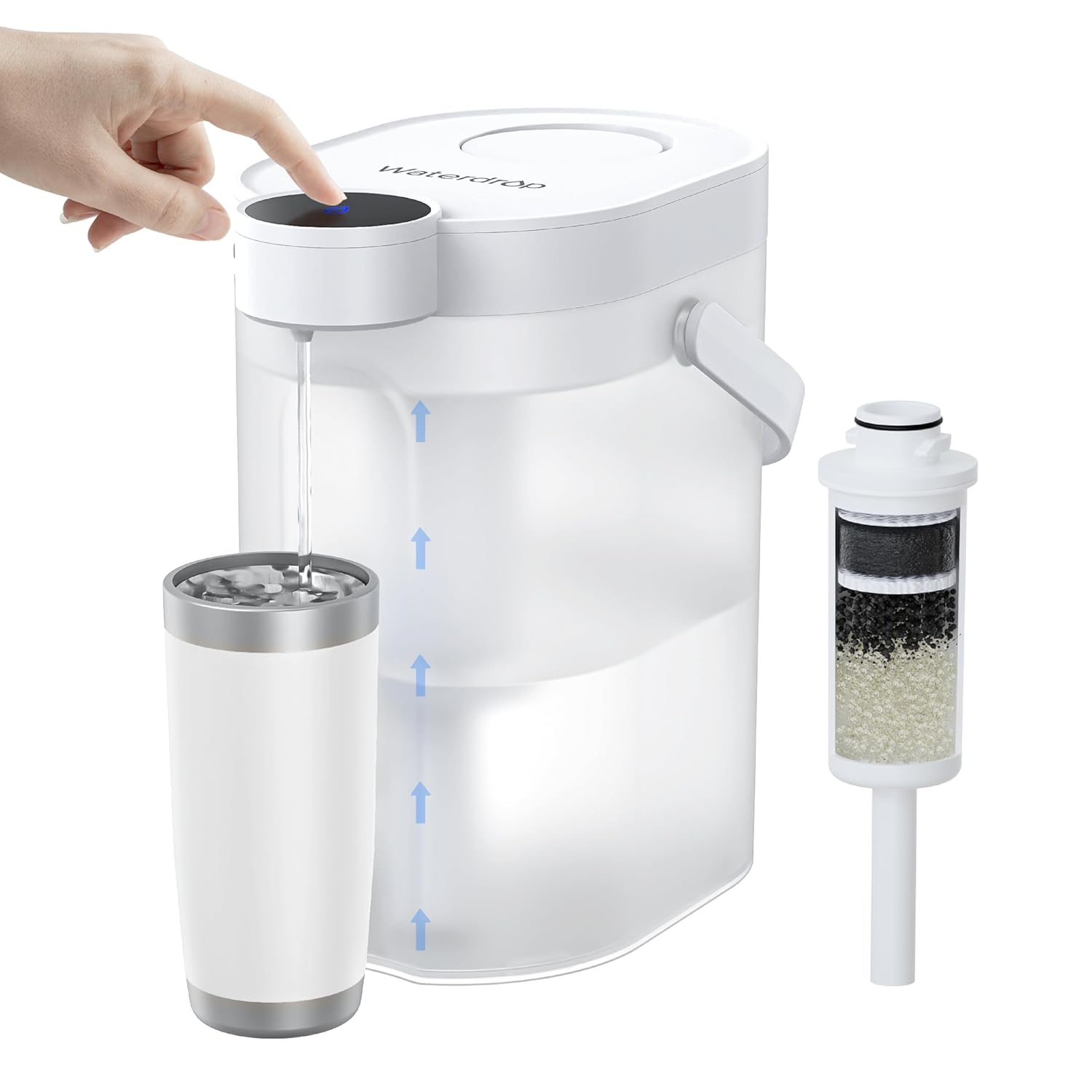
A three-part bed of coconut shell carbon, ion-exchange resin and carbon fibre reduces hardness minerals along with chlorine and copper, and it dispenses electrically from a 4-litre tank.

£44.99 inc. VAT
Fast, FREE UK delivery on all orders £40 or more. Orders under £40 pay a flat £3.99 delivery.

A 4-litre electric jug aimed squarely at hard-water households. Ion-exchange resin reduces calcium and magnesium — the minerals that cause scale and chalky taste.

Secure CheckoutCard details never touch our servers
Honest AdviceAsk us anything before you buy
Free ShippingMinimum spend required
Easy ReturnsHassle free returns & refunds
Targets hardness mineralsIon-exchange resin reduces calcium and magnesium, not just chlorine.
Three-media filter bedCoconut shell carbon, ion-exchange resin and an activated carbon fibre layer.
20+ contaminants testedIndependently lab-tested across a broad contaminant list.
4 litres, dispensed electricallyA useful family size with no waiting for gravity.

Waterdrop ED06W Softening Electric Filter Jug 4L

Most filter jugs are built around one job: taking the chlorine taste out of tap water. That is a real improvement, but it does nothing about the complaint people in Kent, Essex, Cambridgeshire or Hampshire are more likely to have — water that furs up the kettle, leaves a scum on tea and tastes faintly chalky. That is hardness, and hardness is calcium and magnesium.

The ED06W is the jug in our range built for that. Alongside coconut shell activated carbon and an activated carbon fibre layer, its cartridge contains ion-exchange resin, which works by trading the calcium and magnesium ions in your water for other ions held on the resin. That is the same principle a plumbed-in water softener uses, at jug scale.

It also does the ordinary things well. Waterdrop's third-party testing covers more than twenty contaminants including chlorine, taste and odour, copper, lead, sediment and silt. The tank holds 4 litres and dispenses electrically at the press of a button, with a battery rated for at least 20 days of use per charge.

The trade-off to understand is cartridge life. Ion-exchange resin has a finite exchange capacity, and hard water uses it up faster than carbon alone gets exhausted. This cartridge is rated for around a month, or 40 gallons — noticeably shorter than the three-month cartridges elsewhere in the range. That is the honest cost of asking a jug to do softening.

Specifications

Tank capacity4 litres
Dimensions29.5 x 18.5 x 30 cm
Cartridge lifeAbout 1 month or 40 gallons (roughly 150 litres)
Filter mediaCoconut shell activated carbon, ion-exchange resin, activated carbon fibre layer
TargetsCalcium, magnesium, copper, chlorine, taste and odour, sediment
PowerRechargeable battery, at least 20 days per charge
ColourWhite
ModelWD-ED06W
Weight2.1 kg

Waterdrop ED06W Softening Electric Filter Jug 4L

£44.99 inc. VAT

Free UK delivery · easy returns · secure checkout

Frequently Asked Questions

Will this stop limescale in my kettle completely?

No, and be sceptical of anything that claims otherwise at this price. Ion-exchange resin in a jug cartridge reduces calcium and magnesium, so you should see less scale building up more slowly. Eliminating it entirely is the job of a plumbed-in softener treating the whole supply.

Why is the cartridge life shorter than your other jugs?

Because ion-exchange resin has a finite exchange capacity and hard water consumes it steadily. This cartridge is rated for about a month or 40 gallons, against three months for the carbon-only cartridges. Softening in a jug genuinely costs more per litre — that is the trade.

How do I know if I live in a hard water area?

Your water company publishes hardness by postcode on its website, and it is the quickest way to check. The visible signs are white deposits in the kettle, a film on the surface of tea, spots on glassware out of the dishwasher and soap that will not lather.

Does softened water taste different?

Yes, and not everyone prefers it. Reducing calcium and magnesium removes the chalky edge and tends to make tea and coffee taste cleaner and less flat. Some people find very soft water tastes slightly blank. If you like your water mineral-rich, one of the carbon-only jugs may suit you better.

Is it the same as a plumbed-in water softener?

It uses the same ion-exchange principle but treats only the water you put in the jug, not your whole house. It will not protect your boiler, shower or washing machine.

What if it does not suit me?

You have 30 days to return an unused item in its original packaging for a refund. UK delivery is free over £40.

Hard water in the UK, and what a jug can honestly do about it

6 min read Clean Water Filters

Around 60% of the UK lives in a hard or very hard water area. If you are one of them, the chlorine taste is probably not your main complaint — the kettle is.

What hardness actually is

Hard water is water that has picked up dissolved calcium and magnesium on its way through chalk and limestone. It is not a contaminant and it is not a health problem; it is a nuisance with a chemistry.

When you heat hard water, those dissolved minerals come out of solution and deposit as calcium carbonate — limescale. That is the crust on your kettle element, the film on the inside of the glass, and the scum that floats on tea.

Hardness is measured in milligrams per litre of calcium carbonate:

Classification mg/L CaCO₃
Soft 0–100
Moderately hard 100–200
Hard 200–300
Very hard 300+

Broadly, the south and east of England are hard to very hard; Scotland, Wales, the north west and the south west are mostly soft. Your water company publishes the figure for your postcode, and it takes about a minute to look up.

How ion exchange works

Activated carbon — the media in almost every filter jug — works by adsorption. Organic molecules and chlorine stick to a vast internal surface area. It is excellent at taste and odour and essentially useless against dissolved calcium, which does not stick to carbon.

Softening needs a different mechanism. Ion-exchange resin is a bed of small beads carrying loosely-held ions. When hard water passes through, the calcium and magnesium ions swap places with the ions on the beads. The hardness stays on the resin; the water leaves softer.

The catch is built into the mechanism. The resin has a fixed number of exchange sites. Once they are all occupied, it stops working. A plumbed-in softener gets around this by regenerating the resin with brine on a cycle. A jug cartridge cannot — so it is a consumable, and hard water consumes it faster.

That is why this cartridge is rated for about a month while our carbon-only cartridges run for three. It is not a worse filter; it is doing a harder job.

What a jug will and will not fix

It will help with: the taste and mouthfeel of drinking water, scum on tea, the rate at which your kettle scales up, and cloudiness in hot drinks.

It will not fix: scale in your boiler, shower head, washing machine or dishwasher. Those run on the whole-house supply, and nothing you pour into a jug touches them. Anyone promising otherwise is overselling.

If whole-house scale is the real problem, a jug is a partial answer and a plumbed-in softener is the actual one.

Practical habits that help

  • Descale the kettle anyway, monthly in a very hard area. Filtered water slows scale; it does not abolish it.
  • Do not leave softened water standing for days any more than you would ordinary water.
  • Prime a new cartridge by running the first couple of fills to waste, which clears resin fines and stops the first glass tasting odd.
  • Change it on time. An exhausted ion-exchange bed is not neutral — it simply stops softening while you carry on believing it works.

If softening is not your problem

Most of our range is carbon-based and aimed at chlorine, taste and odour rather than hardness: the Lucid jug is the cheapest way in, and the ED01B is the same idea with a pump. For genuinely comprehensive reduction including dissolved solids, reverse osmosis is the only thing in this catalogue that gets there.

Browse all filter jugs

For kettles that fur up in a fortnight

A jug that goes after calcium and magnesium, not just the chlorine taste.

Still deciding? Ask us a question and we'll help you choose.

Page summary

The Waterdrop ED06W is a 4-litre electric water softening filter jug sold by Clean Water Filters for £44.99. Unlike carbon-only jugs it contains ion-exchange resin that reduces calcium and magnesium hardness minerals as well as copper and chlorine, and has been third-party tested against 20+ contaminants. Its cartridge lasts about one month or 40 gallons, shorter than carbon-only cartridges because ion-exchange capacity depletes faster. It dispenses electrically and the battery lasts at least 20 days per charge.

Waterdrop ED06W Softening Electric Filter Jug 4L £44.99