The complete guide
Electric or gravity: which filter jug suits how you actually drink
Electric filter jugs cost roughly twice what gravity jugs cost and filter the same contaminants. Whether that is money well spent depends entirely on a behavioural question, not a technical one.
The real difference is when the filtering happens
A gravity jug filters in advance. Water sits in the upper reservoir and seeps through the cartridge over several minutes. When you want a drink, you are relying on work that was done earlier.
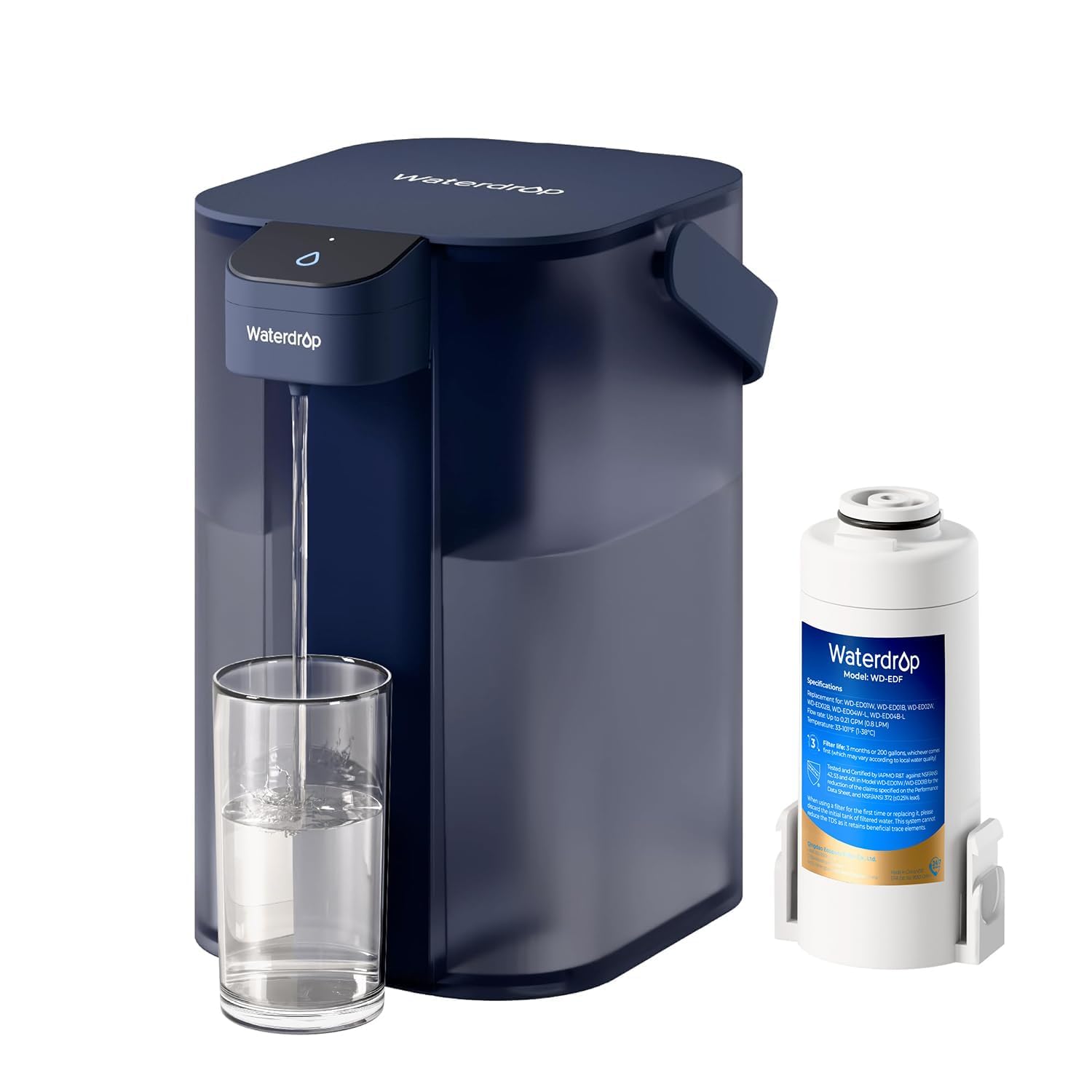
An electric jug filters on demand. The tank holds unfiltered water, and the pump pushes it through the cartridge in the seconds between you pressing the button and your glass being full.
Everything else follows from that one distinction.
When gravity is genuinely better
Be honest about this before spending the extra:
- You are organised. If you refill the jug when you empty it, it is always ready and the waiting never happens to you.
- You want nothing to maintain. No battery, no charging, no pump to fail. A gravity jug is a plastic vessel and a cartridge.
- It lives in the fridge. Gravity jugs are designed to be poured from and stored cold. Electric jugs are worktop appliances.
- Cost matters most. Both the jug and, usually, the cartridges are cheaper.
When the pump earns its money
- A busy household. Where the jug is emptied several times a day, "wait five minutes" happens constantly, and someone always finds it empty.
- Anyone filling bottles. Filling a 750 ml bottle from a gravity jug can drain the filtered chamber. A pump just keeps going.
- Awkward pouring. A full 3.5-litre jug is heavy and needs two hands and a steady wrist. A button does not.
- You want it out of the fridge. Freeing up the shelf a jug occupies is a real benefit in a small kitchen.
What to check before buying an electric one
Battery or mains? This one is battery, rated at around 30 days per charge. That is a genuine convenience — it can sit anywhere — but it is also a consumable. Batteries degrade over years in a way that a plastic jug does not.
Block or granular carbon? This jug uses a 5-micron carbon block. Granular carbon can channel, meaning water finds the path of least resistance and gets less contact with the media. A block forces even contact. It is the better design and it is what the pump pressure is there to push through.
Splash rating. Look for an IP figure. This one is IPX5. Electrical items that live within splashing distance of a tap should say so explicitly.
What neither type does
No jug in this class — electric or gravity — softens water or reduces TDS. They reduce chlorine, taste and odour, and this one is tested to NSF/ANSI 42, 53, 401 and 372. If your actual complaint is limescale on the kettle element, a jug is not the fix; the ED06W targets hardness, and reverse osmosis is what reduces dissolved solids.