The complete guide
What a filter jug really costs to run
Filter jugs are sold on the price of the jug. They are actually paid for in cartridges, and that is where the interesting arithmetic lives.
The number that matters is litres, not months
Cartridge packaging usually leads with a duration — "lasts one month" — which tells you almost nothing, because it depends entirely on how much water you run through it. The honest number is the litre rating.
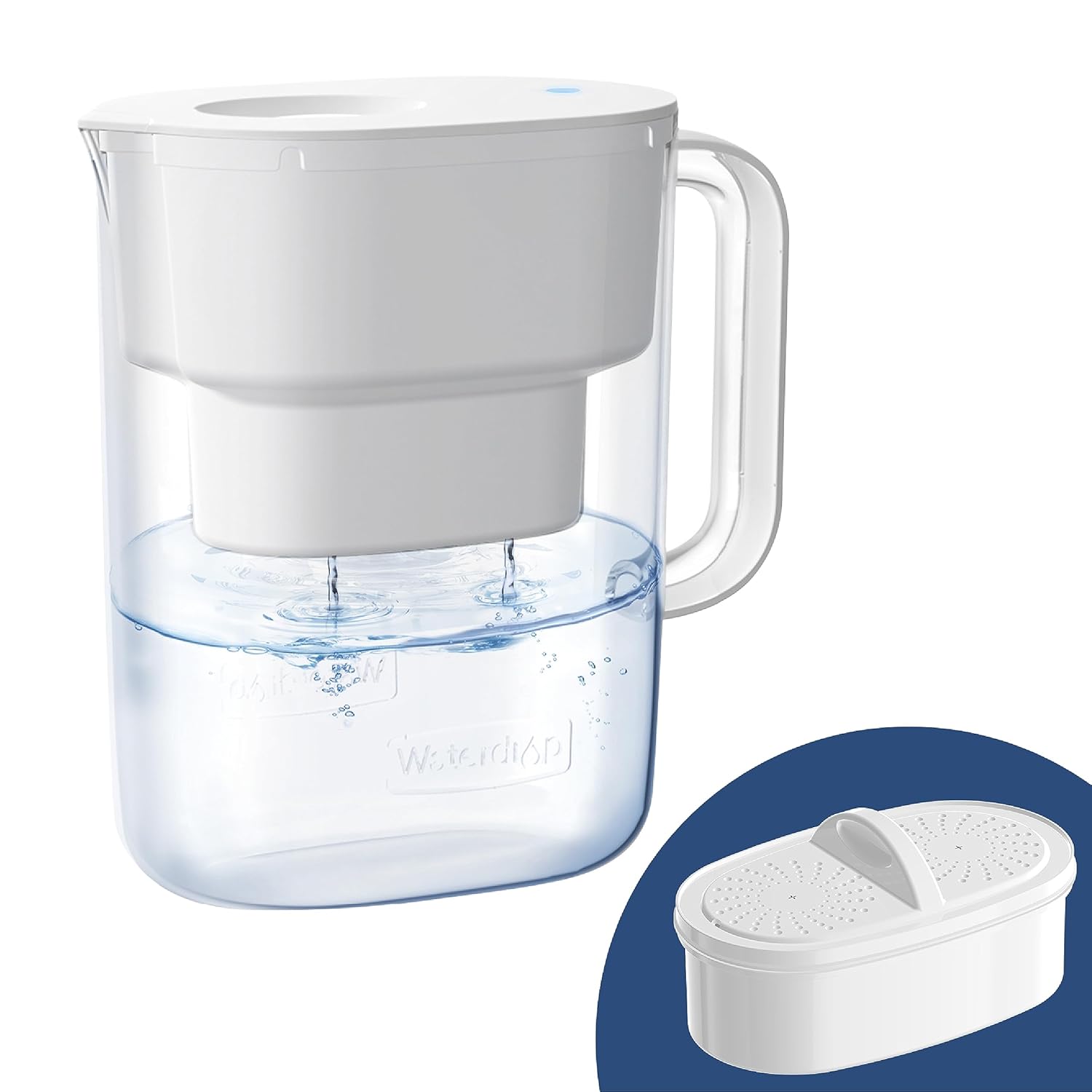
A standard jug cartridge is rated for somewhere around 100 to 150 litres. The cartridge in this jug is rated for 757 litres. If your household drinks two litres of filtered water a day, that is about 380 days of drinking water per cartridge in theory, and comfortably a quarter of a year in practice once you include the water you use for tea, coffee, cooking and topping up bottles.
So the useful comparison between two jugs is not the shelf price. It is:
cost per cartridge ÷ litres per cartridge = cost per litre of filtered water
Run that calculation before you buy and cheap jugs with short cartridges often turn out to be the expensive option.
What shortens cartridge life
Three things move the number, and only one of them is in the marketing:
- Water hardness. Hard water loads a cartridge faster. Much of the south and east of England is in a hard or very hard band, and cartridge life there sits at the pessimistic end of the range.
- Sediment. If your supply runs cloudy after works on the mains, the cartridge does more mechanical filtering and clogs sooner.
- Volume, obviously. A household of four drinking filtered water all day is not the same as one person filling a glass in the evening.
How to tell a cartridge is finished
You do not need an indicator to know. The two reliable signs are flow rate and taste. When the reservoir takes noticeably longer to drain than it did when new, the media is loading up. When the chlorine tang starts creeping back into a glass of cold water, the carbon is saturated. Either one is your cue, whether or not the calendar agrees.
There is a third reason to change on schedule rather than on symptoms: a cartridge left in a warm kitchen for months past its rating is a damp carbon bed, and damp carbon beds are hospitable places. Rinse the jug weekly and do not park an exhausted cartridge in it over a holiday.
Getting the most out of each one
- Prime it properly. Soak the new cartridge and run the first two fills to waste (they are fine for watering plants). This clears loose carbon fines and stops the first glass tasting grey.
- Keep it wet. Once a cartridge has been used, letting it dry out and rewetting it repeatedly is harder on it than steady use.
- Fill from cold. Hot water damages the media and is not what the certification covers.
- Wash the jug, not just the filter. The body is the part that grows a film if you leave water standing in it for a week.
Where this jug sits
The Lucid is the entry point to our range: no power, no installation, the lowest cost per litre of anything here, and a certification that covers the thing most people are actually trying to fix — the taste of chlorine. What it will not do is soften your water or reduce TDS. If limescale is your problem, look at the ED06W softening jug; if you want dissolved solids out, that is a reverse osmosis job.