The complete guide
Chilled water at home: space, energy and the case against the fridge jug
The default British solution to cold filtered water is a jug in the fridge door. It is free, it works, and it has two costs nobody counts until they stop paying them.
The two hidden costs of the fridge jug
Space. A 2-litre jug occupies a door shelf or a good portion of a main shelf. In a small or integrated fridge, that is a meaningful percentage of your total cold storage, permanently allocated to water.
Sequencing. A fridge jug is only cold if it has been in there long enough. Refill it after dinner and the water you pour at bedtime is tap-temperature. Households solve this by keeping two jugs, which doubles the space cost, or by accepting lukewarm water half the time.
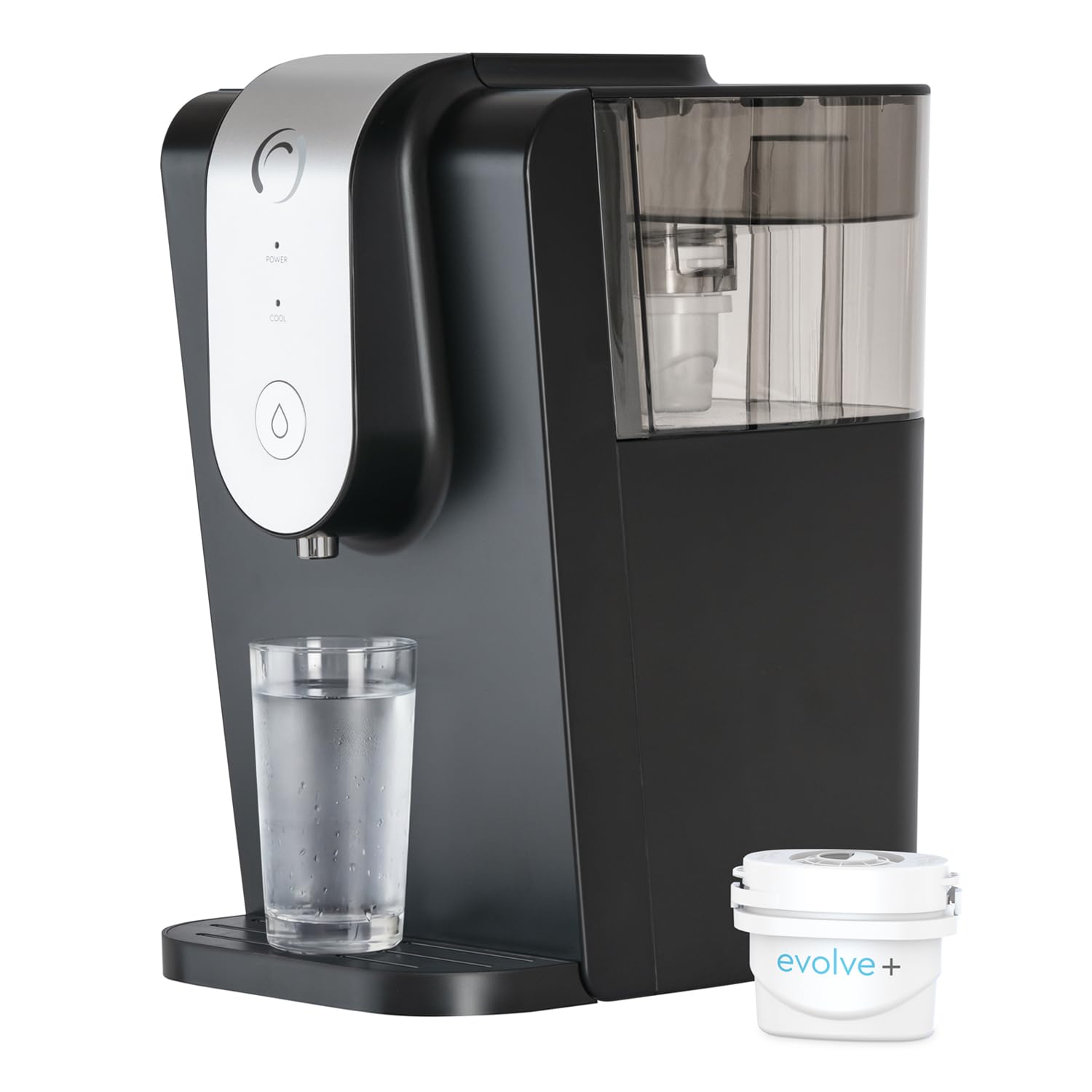
A dedicated chilled dispenser removes both. The tank is always at temperature and the fridge is entirely yours again.
Why 12°C rather than colder
This dispenser holds its tank at 12°C, which surprises people who expected fridge temperature. It is a sensible target for two reasons.
Taste. Very cold water suppresses your ability to taste. That is useful if the water is unpleasant and counterproductive if you have just spent money making it taste good. Around 10–14°C is widely considered the range where water is refreshing but still has character — it is roughly cellar temperature, and not coincidentally the range at which many drinks are served.
Energy. The work a chiller does scales with the temperature difference it maintains. Holding a tank 8°C below a warm kitchen is a far smaller job than holding it 15°C below, and it lets the unit use a modest chiller rather than a compressor.
Worktop dispenser versus fridge jug, honestly
The dispenser wins on convenience and space. The jug wins on cost and simplicity: it is £25 rather than £99, it has nothing to fail, and it uses no electricity at all.
The switch makes sense when:
- Your fridge is small and the water jug genuinely competes with food.
- Multiple people draw water through the day, so "is it cold yet" is a recurring question.
- You want capacity — 8.2 litres is four fridge jugs.
- The kitchen has worktop space and a spare socket to give up.
It does not make sense if you live alone, refill once a day and have a fridge with room to spare. That is a £25 problem, and the Lucid jug solves it.
Practical points before you buy
- Measure the height. At 42.8 cm this will not fit under standard wall units with 45 cm clearance once you account for lifting the lid to fill it.
- Socket placement. It needs a permanent socket, and you do not want an extension lead running across a worktop near a water source.
- Filling. You fill it by hand, and 8.2 litres is heavy. Fill it in place with a jug rather than carrying the unit to the sink.
- Ventilation. Anything that chills needs to shed heat somewhere. Leave a gap behind it rather than pushing it flush to the wall.
If you want the same idea in a smaller footprint with selectable dispense volumes, the Aqua Optima Aurora is the 3.8-litre version of this argument.