The complete guide
Keeping a water dispenser clean (the part nobody does)
People replace cartridges religiously and never clean the container. This is backwards. The cartridge is sterile-ish, sealed and engineered. The tank is an open vessel of room-temperature water with a lid on it.
Why the container is the weak point
A filter cartridge removes chlorine. Chlorine is in your tap water precisely because it suppresses biological growth all the way from the treatment works to your tap. Take it out and you have made the water taste better and removed its residual protection at the same time.
That is entirely fine if the water is drunk within a day or two from a clean container. It is less fine if the same three litres have been sitting in the bottom of a tank for a fortnight, in a warm kitchen, behind a lid.
This is not an argument against filtering. It is an argument for washing the thing.
A realistic cleaning routine
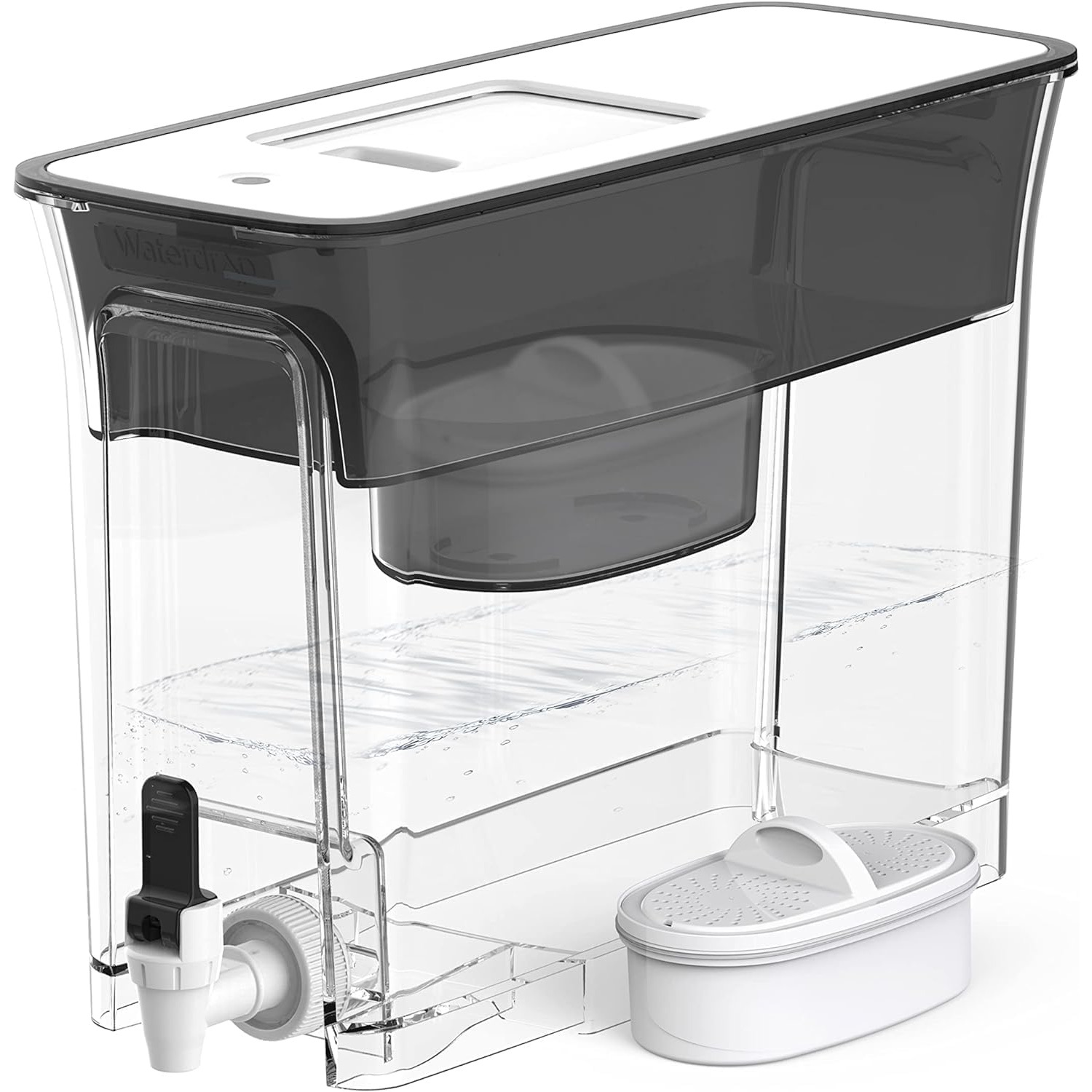
Weekly — five minutes. Empty whatever is left. Take the tank apart into its main components: upper reservoir, lower body, lid, tap. Wash in warm soapy water with a soft cloth or bottle brush, rinse thoroughly, air dry. Pay attention to the lower body, which is where filtered water stands longest.
Monthly — the tap. This is the bit that gets skipped. Taps have an internal channel and a seal, both permanently damp, both invisible. Unscrew the tap if your model allows, and run a thin brush or a cotton bud through the outlet. A tap that has never been cleaned is the most likely source of any off taste that a new cartridge does not fix.
Quarterly — descale. In a hard water area you will see a chalky film on the inside of the lower chamber. Fill with a solution of one part white vinegar to three parts water, leave for an hour, empty and rinse very thoroughly — three rinses, not one. Never do this with the cartridge fitted.
What not to use
- Bleach or strong chemical cleaners. Residue in a drinking vessel is worse than the problem you were solving.
- Abrasive scourers. They scratch plastic, and scratches are where films take hold.
- Boiling water. It warps the plastic and destroys seals.
- The dishwasher, unless the manufacturer says so. High heat distorts gravity tanks and can ruin a tap's seal. Check before you assume.
Habits that reduce the cleaning burden
- Only fill what you will drink. A tank that empties and refills daily never develops a problem in the first place. Filling 8 litres for a household of one is how films start.
- Keep the cover on. Especially in a fridge — this dispenser's sliding cover is there to keep odours out, and it does the same for anything else airborne.
- Empty it before you go away. Do not come back to a fortnight-old tank.
- Dry it properly between deep cleans rather than reassembling it wet.
The five-minute rule
If you refill this dispenser daily, the water in it is never more than a few hours old and none of the above is urgent. The fast filtration — a full tank in about five minutes — is what makes daily refilling practical rather than a chore, and honestly that is a bigger contributor to clean water than any cleaning schedule.